

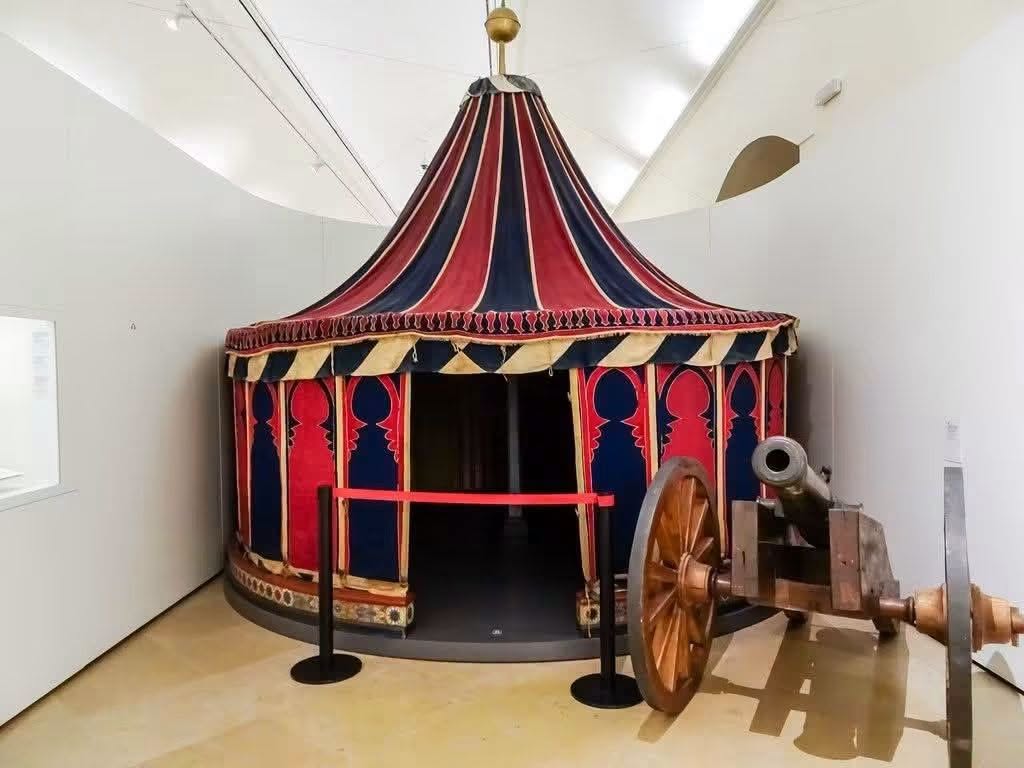
يحتفظ المتحف الحربي الإسباني (Museo del Ejército) الواقع في قصر طليطلة (Alcázar de Toledo) بخيمة الأمير مولاي العباس، وهو شقيق السلطان المغربي محمد الرابع وقائد الجيش المغربي آنذاك.
• (حرب تطوان 1859 – 1860)
في منتصف القرن التاسع عشر، اندلعت حرب بين إسبانيا والمغرب عُرفت باسم “حرب إفريقيا” أو “حرب تطوان”. تولى الأمير مولاي العباس قيادة القوات المغربية لمواجهة الجيش الإسباني الذي كان يقوده الجنرال ليوبولدو أودونيل (Leopoldo O’Donnell).
شهدت الحرب معارك ضارية ومحورية مثل معركة “الفنيدق” (Castillejos) ومعركة “واد راس” (Wad-Ras).
كانت هذه الخيمة الفاخرة تمثل المقر الميداني لقيادة الأمير مولاي العباس لإدارة العمليات العسكرية.
• حصل عليها الإسبان بعد تراجع القوات المغربية في المعارك الختامية واقتراب القوات الإسبانية من طنجة، استولى الجيش الإسباني على معسكر القيادة المغربي كـ “غنيمة حرب” أو تذكار عسكري للنصر.
• المفارقة التاريخية هي أن الخيمة نفسها شهدت الفصول الأخيرة للحرب؛ ففي 26 أبريل 1860، استُخدمت الخيمة لعقد المفاوضات النهائية وتوقيع “معاهدة واد راس” الشهيرة بين الأمير مولاي العباس والجنرال أودونيل لإنهاء الحرب بشروط قاسية على المغرب.
بعد نهاية الحرب، نُقلت الخيمة إلى إسبانيا كواحدة من أبرز القطع التاريخية التي توثق تلك الحقبة.
استقرت الخيمة في نهاية المطاف داخل المتحف الحربي في قصر طليطلة الشهير، حيث خضعت لعمليات ترميم دقيقة للحفاظ على نسيجها وزخارفها المغربية الأصلية، وتُعرض حالياً للزوار كجزء من المقتنيات التي تعكس التاريخ العسكري المشترك بين البلدين.
The Spanish Army Museum (Museo del Ejército), located in the Alcázar of Toledo, houses the tent of Prince Moulay Abbas, brother of Sultan Mohammed IV of Morocco and commander of the Moroccan army at the time.
The Tetouan War (1859–1860)
In the mid-19th century, a war broke out between Spain and Morocco, known as the “War of Africa” or the “Tetouan War.” Prince Moulay Abbas commanded the Moroccan forces in their confrontation with the Spanish army, which was led by General Leopoldo O’Donnell.
The war witnessed fierce and decisive battles, including the Battle of Castillejos and the Battle of Wad-Ras.
This luxurious tent served as the field headquarters of Prince Moulay Abbas, from which he directed military operations.
The Capture of the Tent
The Spanish forces acquired the tent after the Moroccan army withdrew during the final battles, as the Spanish army advanced toward Tangier. The Moroccan command camp was seized as a “war trophy” or military memento of the Spanish victory.
A Historical Paradox
The tent itself witnessed the final chapters of the war. On April 26, 1860, it was used for the final negotiations and the signing of the famous Treaty of Wad-Ras between Prince Moulay Abbas and General O’Donnell, bringing the war to an end under harsh terms for Morocco.
After the war, the tent was transported to Spain as one of the most prominent historical objects documenting that period.
The tent eventually became part of the collection of the Spanish Army Museum in the famous Alcázar of Toledo, where it underwent careful restoration to preserve its original Moroccan fabric and decorative elements. It is currently displayed to visitors as part of the museum’s collections, reflecting the shared military history of Morocco and Spain.